How to Write a Research Paper: Structure, Essay Format & APA vs MLA Style Guide
Table of Contents
Toggle🎯 Take the Fear Out of Research Papers
✍️ Writing a research paper for the first time? It can definitely feel like a lot—especially when you’re staring down confusing citation rules and formatting styles. But the good news? Once you get the hang of how it all works—how to structure your paper, when to use APA vs. MLA—it starts to click. This guide breaks everything down into bite-sized steps, so you can tackle your paper with way less stress (and way more confidence).
📚 1. Understanding the Assignment
Before you type a single word, make sure you know what your professor is asking for.
Read the prompt carefully: Highlight key verbs like “analyze,” “argue,” or “compare.”
Clarify the goal: Are you writing an argumentative paper? A literary analysis? A research summary?
Word count & due date: Know your limits and plan your timeline accordingly.
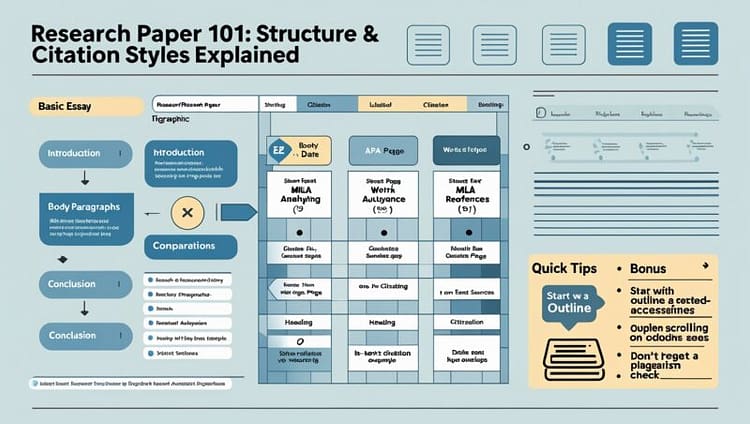
✍️ 2. Basic Research Paper Structure (This Works for Most Essays)
Most academic papers follow a clear structure:
Title Page (APA only)
Introduction
Hook to grab attention
Background context
Thesis statement
Body Paragraphs
Clear topic sentence
Evidence with proper citations
Your analysis (why the evidence matters)
Smooth transitions
Conclusion
Restate thesis
Recap main points
Final insight or next steps
References / Works Cited
Your full list of sources
🧩 Download our Research Paper Outline Template to get started easily.
🧠 3. Research & Organizing Your Sources
Good research papers start with strong, credible sources. Use:
Academic databases like Google Scholar, JSTOR, or your school’s library.
Save every source in a source tracker spreadsheet so you don’t lose anything.
Helpful tools:
“Struggling to find time to work on your paper? Check out our Time Management Tips to stay on track with your writing schedule.”
📏 4. APA vs MLA Formatting: What’s the Difference?
| Feature | APA (7th ed.) | MLA (9th ed.) |
|---|---|---|
| Used in | Psychology, Education, Sciences | Humanities, Literature |
| Title Page | Required | Not required |
| In-text citation | (Author, Year) | (Author Page) |
| References | “References” page, alphabetized | “Works Cited” page, alphabetized |
| Header | Page number only (top right) | Last name + page number (top right) |
| Font & Spacing | 12pt Times New Roman, double-spaced | 12pt Times New Roman, double-spaced |
Useful guides:
📅 6. Free Downloads
📄 Essay Structure Template (Google docs)
📚 APA vs MLA Cheat Sheet (Google docs)
✅ Source Tracker Spreadsheet (Google Doc)
🧑🎓 7. Final Tips from Real Students
Start early. Even just 30 minutes a day adds up.
Don’t wait until the night before to format your citations.
Read your final paper out loud to catch awkward phrases.
Use Grammarly or a writing center for feedback before submitting.
“Need focus tools to stay on task? These Chrome Extensions can help cut distractions while you write.”