🏠 Housing Tips for International Students
Table of Contents
ToggleA Real-World Guide to Finding Your First Home Away from Home
Moving to another country for college? That’s a big deal. Between the culture shock, paperwork, and figuring out how to call your family across time zones, the last thing you want is housing stress.
Here’s the kind of advice you wish someone had handed you before landing in a new country—based on what actually matters when you’re trying to settle in.
🔍 Start Your Search Early (Seriously)
If your school offers campus housing for international students, that’s a solid starting point. It’s usually furnished, close to classes, and takes some guesswork out of settling in. But spots go fast, so don’t wait around.
If you’re going off-campus, start looking 2–3 months in advance. Check out:
Your school’s housing board
Facebook groups for incoming students
Websites like AmberStudent, HousingAnywhere, and Unilodgers
Even if you’re not ready to sign anything, getting familiar with the types of places available—and their price ranges—makes everything less overwhelming later on.
💡 If you think you might switch schools later, it’s smart to factor that into your housing choice. You can check out our full guide on how to transfer colleges in the U.S. for tips on making a smooth move.
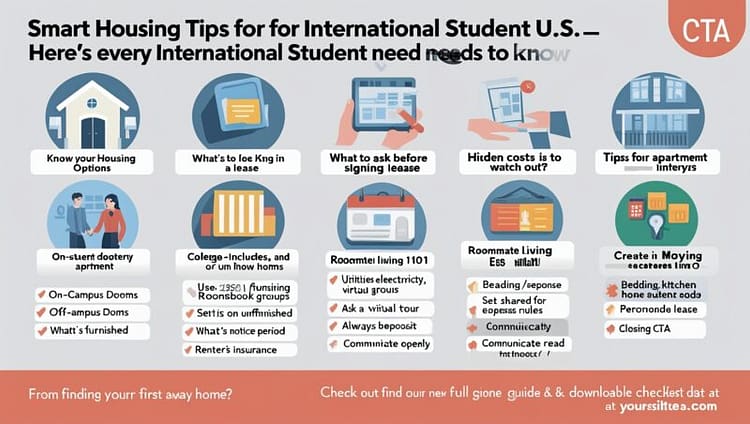
💡 Know Your Options
You’ve got choices. Here’s the lowdown:
Dorm rooms: Great for meeting people fast, and most are move-in ready.
Shared apartments: Usually cheaper than solo living and gives you more freedom. But you’ll probably need to buy furniture and split bills.
Homestays: Living with a local family can be a comforting option if you’re nervous about adjusting.
Student housing complexes: A middle ground—more independence than dorms but still designed for students.
💸 Budget for More Than Just Rent
Rent might be the biggest line on your budget, but there’s always extra stuff:
Security deposit (1–2 months’ rent)
Utilities (internet, electricity, water)
Transit passes or bike rental
Furniture, kitchen basics, laundry supplies
Some listings include utilities—others don’t. Ask what’s covered before you sign anything.
📌 Planning your finances ahead is key. While most international students can’t access federal aid, our FAFSA & Financial Aid 101 guide explains the system so you can explore other resources or understand what U.S. students around you are using.
🧍♀️ Finding the Right Roommate
If you’re sharing space, don’t just room with the first person you meet. Ask them:
How clean are you—really?
What’s your daily routine like?
Do you like quiet or music 24/7?
How do you feel about guests or overnight visitors?
You don’t need to be best friends—but you do need to be on the same page.
Helpful roommate finder sites:
🚫 Avoid Scams
Scam listings are real, and international students are often targets. Red flags to watch:
Prices way below market
Requests for upfront payment through sketchy apps
No photos or fake-looking ones
The landlord can’t meet or video call
Stick to verified platforms and ask your university’s housing office if you’re unsure.
✈️ What to Pack vs. Buy
When you’re flying in, pack light—but smart.
Bring:
Passport, visa, I-20, acceptance letters
A few go-to outfits for the local weather
Meds, toiletries, chargers, and adapters
Laptop and study gear
Buy locally:
Bedding and towels
Dishes, cookware
Cleaning supplies
Desk lamp and hangers
Stores like Target, IKEA, and Amazon can help you set up quickly.
📞 Ask for Help—You’re Not on Your Own
Your school’s international student office isn’t just for emergencies. They can recommend trusted landlords, look over leases, and even connect you with other students who are still looking for a place.
Also check out:
Orientation housing workshops
WhatsApp or Facebook student groups
The student union or campus life center
✅ Download: The Ultimate International Student Housing Checklist
To make things easier, we put together a checklist with:
Questions to ask landlords
Essentials to pack
Move-in day reminders
Roommate convo starters
Final Thought
Finding housing overseas can feel like a wild guessing game—but it doesn’t have to be. With the right prep and a little patience, you’ll find a spot that fits your needs and your budget. And once you’ve got your own space—even if it’s just a dorm room with string lights—it’ll start to feel like home.